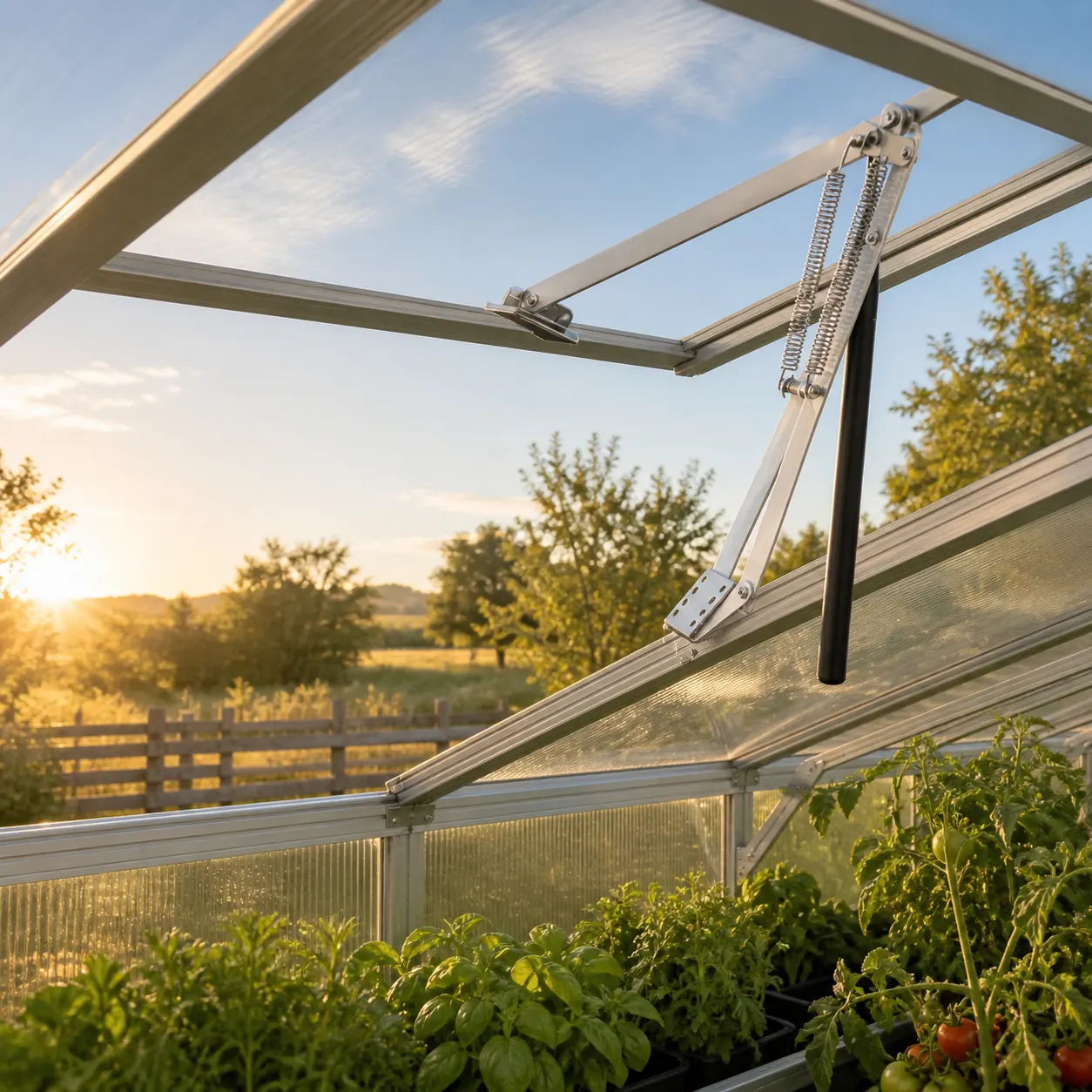
Short answer: A thermal greenhouse window opener can reduce the need to open a roof vent by hand when the greenhouse warms up, provided the existing window is suitable. The current product page lists a thermally activated greenhouse window opener with all-aluminium dual-spring construction and a 7 kg or 15 lb load rating. It does not publish the activation temperature, opening travel, fixing dimensions, brand compatibility, wind resistance, certification or service life. Treat those omissions as buying questions. Test the vent by hand, compare its load and movement, and observe the installed mechanism before trusting it with a crop.
Read the thermal claim precisely
The current listing describes a thermally activated greenhouse window opener and says it helps roof ventilation react to warmth without relying on electricity or someone being present. That is a clear use case for a passive roof vent. It is not a stated promise of a particular trigger temperature or opening speed.
The manufacturer does not specify the temperature threshold, opening angle, closing behaviour, reset method or response time. If a plant or greenhouse routine depends on one of those values, obtain the missing information before purchase rather than treating thermal wording as a calibration figure.
| Documented detail | Practical use | Not established |
|---|---|---|
| Thermal activation | Passive response to warmth | Exact trigger temperature or timing |
| All-aluminium body | Construction comparison point | Corrosion result or lifespan |
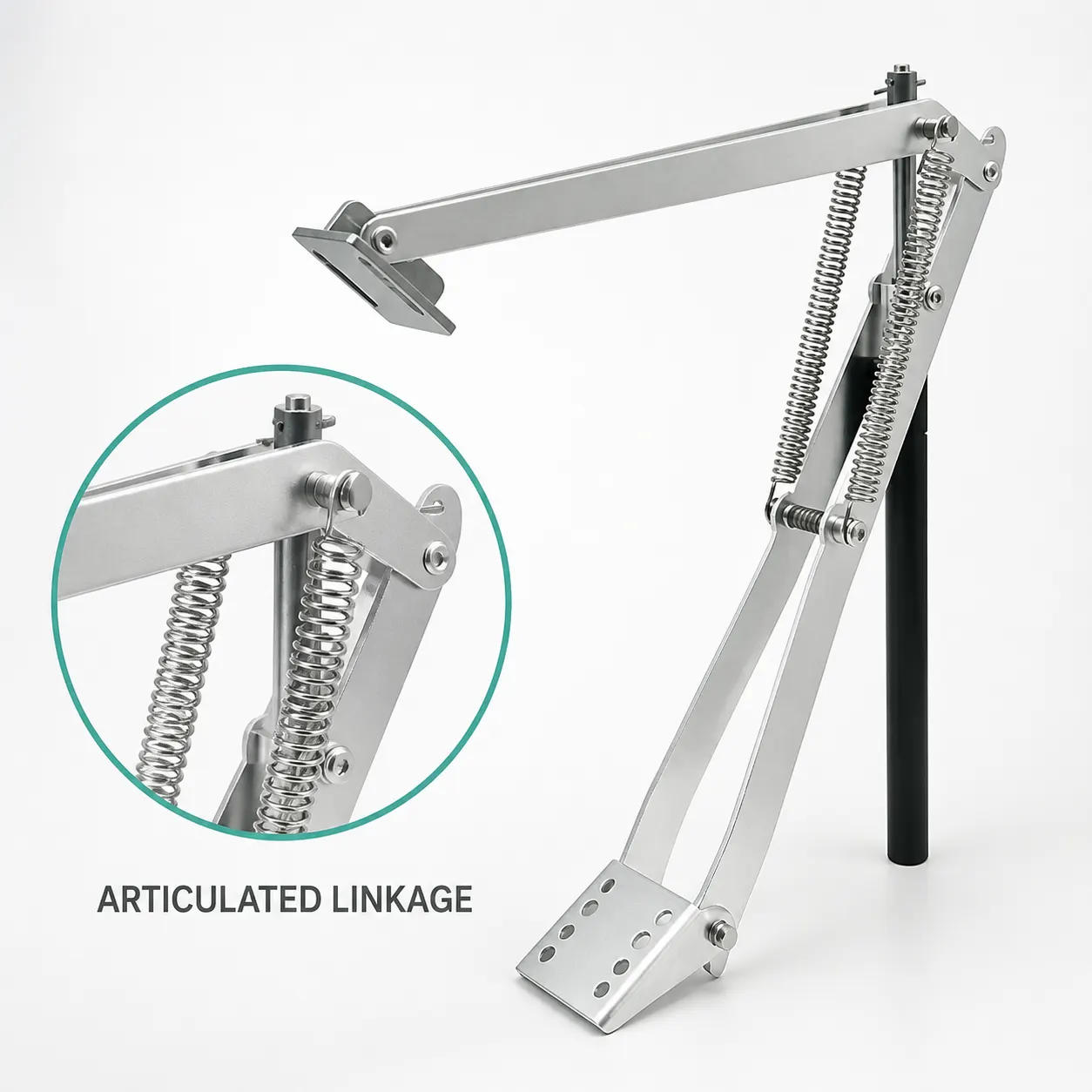
| Dual springs | Mechanism description | Universal force or travel |
| 7 kg or 15 lb | Listed load boundary | Fit for every window or frame |
Check installation fit at the greenhouse
Take the greenhouse window as the starting point. Confirm whether it is a hinged roof vent, then open and close it by hand. A frame that binds, twists or catches needs attention before an opener is fitted. A side louvre, door or sliding panel may require a different product type.
The 7 kg or 15 lb rating should be compared with the actual lifted panel and the resistance created by its hinges and frame. The manufacturer does not specify bracket dimensions, drilling positions, universal compatibility or the force needed to move a particular window.
- Photograph and identify the actual vent or roof window.
- Check free movement through the full manual travel.
- Assess the panel load against 7 kg or 15 lb.
- Inspect the aluminium or other frame around the fixing points.
- Confirm the fitting method before making permanent holes.
Use observation as part of commissioning
After fitting, watch the opener during a range of warm and cool conditions. Check for smooth opening, safe closing and any contact between the window and frame. Do not leave valuable young plants dependent on a new mechanism until you have seen how the vent behaves in your greenhouse.
A single roof window may not be enough in a hot spell. Doors, other vents, shade and watering can still be part of the growing routine. The product page does not claim a particular greenhouse temperature, crop result or protection from heat stress.
Limits before committing to the opener
The listed aluminium dual-spring construction and 7 kg or 15 lb rating make the product worth comparing for a suitable roof window. They do not establish certification, wind resistance, corrosion performance, activation schedule, replacement parts, brand fit or service life.
The manufacturer does not specify those missing details on the current page. If the greenhouse is exposed, the vent is heavy or the installation depends on precise temperature response, ask for written confirmation or choose a product with a fuller technical and fitting specification.
Related guides and product details
A thermal opener is a sensible candidate only after the window movement, load and fitting points have been checked against the documented limits. Read Automatic Greenhouse Vent Opener: Check the Roof Window First for related guidance. Read Greenhouse Auto Vent with No Electricity: Check the Window for related guidance. Review the documented specification on the Thermally Activated Greenhouse Window Opener product page before ordering.
Sources and safety context
- Supports the thermal window-opener description, all-aluminium dual-spring construction and 7 kg or 15 lb load rating. Current greenhouse window opener page.